

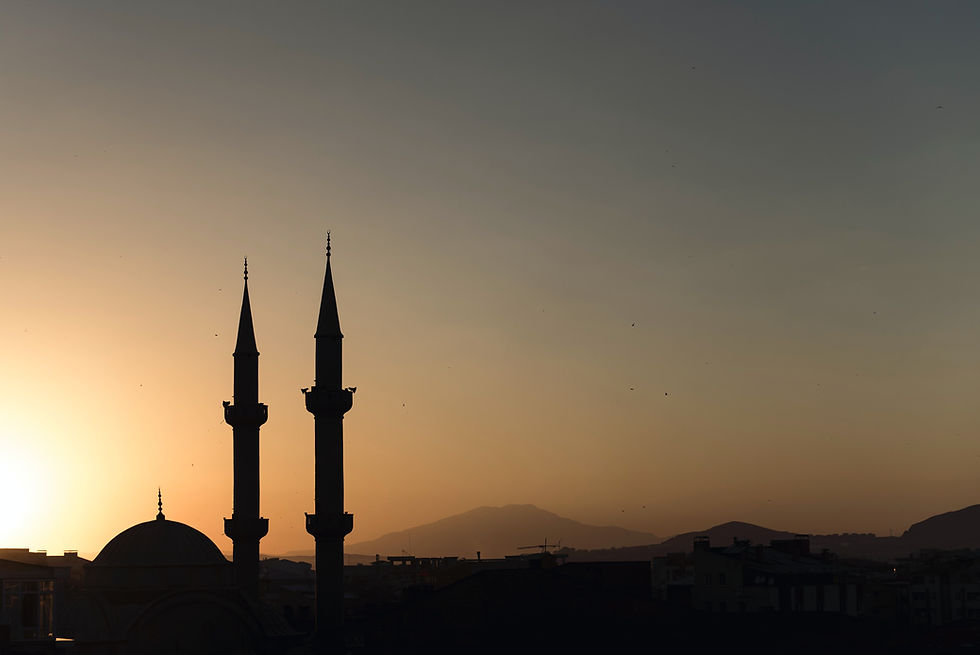
In the summer of 2026, I traveled to Turkey hoping to encounter firsthand the layered history and living culture of Constantinople, once the capital of the Eastern Roman Empire. I wanted to stand before Hagia Sophia and witness the splendor of Byzantine art in person while also visiting the city’s great mosques to better understand the depth, beauty, and spiritual imagination of Islamic culture. As I prepared for the journey, I suddenly had an idea: to bring my Chinese paintings to this ancient city, where so many artistic and cultural traditions have converged, and to engage in a meaningful exchange through art. I felt that sharing my work in such a place—and hearing the responses of local viewers and art lovers—would be not only deeply meaningful but also genuinely exciting.
From the perspective of art history, Istanbul is a city of profound cultural depth and singular artistic character. Situated at the crossroads of Europe and Asia, it has long served as a vital nexus of exchange between Eastern and Western civilizations, giving rise to an artistic identity shaped by both layered history and cultural synthesis. Here, the religious art and architectural traditions of the Byzantine era intersect with the courtly aesthetics, calligraphy, and ornamental vocabulary of the Ottoman world, together forming Istanbul’s rich and distinctive visual culture. For this reason, the city’s art embodies not only the weight of history but also a spirit of diversity, openness, and vitality.
My decision to present an exhibition of traditional Chinese painting in Istanbul reflected, on the one hand, an important stage in my ongoing commitment to preserving and promoting this tradition; on the other, it arose from my longstanding interest in art history and my desire to understand how local audiences might perceive and interpret Chinese painting through their aesthetic and cultural lens. The first audience I imagined was local art students, so I initially reached out to an international university in the city. The university responded with great warmth and enthusiasm; however, because July fell during the summer break, I was unable to meet students on campus. I then began contacting local art institutions, and I was very fortunate to receive both responses and support. Through LinkedIn, I was also able to invite art professionals and enthusiasts, and in this way my solo exhibition of Chinese painting in Istanbul gradually took shape. On this occasion, I introduced the characteristics, history, categories, and techniques of Chinese painting in a concise and accessible way, allowing visitors not only to appreciate the works themselves but also to gain a broader understanding of the artistic tradition from which they emerged.

Eshibition Preface
As the second stop in my journey of bringing Chinese painting to audiences around the world, I will present a personal exhibition in Istanbul, Türkiye, on July 19, 2026, accompanied by a lecture on the history of Chinese painting and an introductory workshop on traditional Chinese painting practice.
Over the past year, my study of art history has deepened my understanding of the traditions, philosophies, and techniques embedded in Chinese painting. Through this exhibition, I hope not only to share my works but also to introduce a broader audience to the visual language, historical development, and spiritual essence of this artistic tradition. In this sense, the exhibition is both a presentation of paintings and an invitation to enter a different artistic world.
The title of my lecture, Traditional Chinese Painting: A Different Way of Seeing, reflects the central question I hope to explore. Beginning with the distinctive qualities of Chinese painting in comparison with Western painting, I wish to guide and accompany viewers as they step into the spiritual and aesthetic world of Chinese art—one shaped by brush and ink, by rhythm and silence, by the harmony between human feeling and the natural world.
Istanbul, with its profound history, rich artistic diversity, and unique position between Europe and Asia, offers an especially meaningful setting for this event. It is precisely this cultural depth and openness that makes this sharing so singular and so memorable. I hope this exhibition, lecture, and workshop can become a small but sincere bridge—connecting different artistic traditions and bringing more art lovers into conversation with the enduring beauty of Chinese painting.
I. The venue
This time, I chose to collaborate with the professional gallery organization Masterpiece. They welcomed me warmly, and we worked out all the details in just a dozen emails. They also helped produce a Turkish-language poster and promoted the event on LinkedIn and Instagram. Here, I would especially like to thank Ms. Gözde Ülger, whose professionalism and enthusiasm made the entire process move forward so smoothly.
You may learn more details of the gallery from the file below.

Ms. Gözde and I
II. About the lecture
What set this solo exhibition and workshop apart was the decision to begin not with my own works but with a brief introduction to Chinese painting. Looking back, this opening became an important bridge between the audience and the exhibition itself. It allowed me to share some of what I had learned through more than a year of studying art history, while also giving visitors a clearer understanding of the terms and ideas that shaped my presentation, helping them engage with the works more fully.
Of course, I could not cover the full history of Chinese painting in just 40 minutes. Faced with that limitation, I spent a long time considering how best to frame the introduction, ultimately choosing to begin with the differences between Chinese and Western painting concepts. This proved to be an effective point of entry, as it helped situate the philosophical core and underlying ideas of Chinese painting—elements that I believe are essential to its appreciation. As for the more technical aspects, such as materials and methods, a basic introduction was enough to ensure that the audience could follow the discussion without feeling entirely unfamiliar with the subject.
The exchange with the audience after the lecture was also a meaningful part of the event. From the registration list on LinkedIn, I had already noticed that many attendees were art professionals or enthusiasts, and this was reflected in the quality of the feedback they offered. Their responses added another layer to the experience and made the workshop feel less like a one-way presentation and more like an open conversation around the works.
The lecture's core abstract is provided below. You can also download the presentation slides by clicking the link below.
Abstract
This lecture offers an accessible introduction to traditional Chinese painting by approaching it not simply as an artistic tradition but as a distinct way of seeing the world. Rather than presenting a purely chronological survey, the talk examines the aesthetic logic, philosophical foundations, and material practices that shape Chinese painting across time. It explores how Chinese painting has often emphasized lived experience, rhythm, inner vitality, and the expressive potential of brushwork, ink, and empty space, while also situating these qualities in relation to broader cross-cultural comparisons with Western art. Particular attention is given to the relationship between painting and Daoist thought, the major genres of figure, landscape, and bird-and-flower painting, and the two principal stylistic approaches of gongbi and xieyi. The lecture further considers the historical development of the tradition, as well as the essential role of materials—including ink, brush, paper, and silk—in shaping artistic expression. Through both conceptual discussion and selected examples from the speaker’s own works, the lecture ultimately invites audiences to understand traditional Chinese painting as a visual language of space, breath, contemplation, and transformation, one that continues to offer meaningful perspectives for contemporary viewers across cultures.
III. The live experience of Chinese Painting
Another challenge of this event was the structure of the workshop itself. Due to time constraints, I was unable to divide the participants into smaller groups or time slots for more focused guidance. The prospect of teaching 20 people at once—the majority of whom had little to no experience with Chinese painting—seemed like a significant challenge. Nonetheless, I didn't want any of my guests to leave empty-handed.

Sized Xuan-paper Round Fan for Visitor Use
With the challenge in mind, I made several practical adjustments in advance. For the workshop, I prepared round fans made of sized Xuan paper, as painting on a preformed rigid surface would be somewhat easier for beginners. To further reduce the level of brush control required, I chose lotus flowers with large petals as the subject of the exercise. At the same time, I pre-recorded a complete demonstration video that covered the entire process, from color mixing to the first brushstroke and the final completion of the piece. This was especially important because, based on my previous experience, most Western oil painters were unable to understand and master the use of water in Chinese painting color preparation in a short timeframe. Before the participants began painting, I also went over the key points with them one by one.
Lotus Painted on Raw Xuan Paper
Lotus Painted on Sized Xuan Paper
IV. Photos and coverage from the event
The response at the event showed that this exhibition was even more successful than I had expected.
For one thing, local Turkish artists, art professionals, and art lovers all showed genuine appreciation for and enthusiasm toward traditional Chinese painting. Their attentive listening during the lectures and their active participation in the Q&A session, where they raised many interesting questions, reflected their enthusiasm. In the hands-on session, although the lotus theme they were painting was not particularly complicated, for people trying Chinese painting for the first time, it was still very difficult to move away from the Western approach of outlining first and then applying color and instead learn to use water to convey the qiyun, or spirit and vitality, of the painting. Even so, they approached the learning and practice with profound seriousness. I found that incredibly encouraging. The participating artists also eagerly claimed the two fan paintings I demonstrated during the workshop. During the exhibition, some artists also asked about the prices of my works and expressed interest in purchasing them. Although selling paintings was not part of the plan for this exhibition, I still felt it was another sign of how much people appreciated Chinese painting.
After several years of studying and exhibiting, I have often worried about whether traditional Chinese painting can truly be accepted by the mainstream international art world and genuinely integrated into it, how many people are still committed to using traditional methods to create Chinese painting, and whether this ancient art form and technique can continue to be passed down. Events like these are the way I do my best to help Chinese painting gain greater understanding and recognition. Through this process, I have also come to better understand the views and attitudes of art lovers from different parts of the world.
Gallery Tour


Event Photos
Three clips from the lecture are included here, covering respectively: the expression of Daoist philosophy in Chinese painting; the main characteristics of Chinese painting in comparison with traditional Western painting, along with an introduction to Triptych of Taihu Rocks; and boneless flower-and-bird painting.
Selected Lecture Clips