
Islamic Aesthetics and the Legacy of Persian Culture from the 16th to 19th Centuries: Insights from the Pudong Art Museum Exhibition
- Cathy Shen

- Feb 18
- 5 min read
"Miracles of Pattern: Masterpieces of Indian, Iranian, and Ottoman Art from the Louvre" is the title of the recent blockbuster exhibition at the Shanghai Pudong Art Museum. Many articles and videos introducing the exhibits are available online for those interested. Before this, many readers may have been puzzled when seeing the exhibition title: Why these three countries? Didn't the Ottoman Empire collapse over a hundred years ago?
After seeing the map at the exhibition entrance, I suddenly understood. The artworks on display mainly come from four empires that existed in history: the Ottoman Empire, the Safavid Empire, the Qajar Dynasty, and the Mughal Empire.
Overview of the Four Empires
The Ottoman Empire was one of the most powerful and longest-lasting empires in history, existing for approximately 600 years (c. 1299–1922). At its peak, it ruled large parts of Southeast Europe, Western Asia, and North Africa from its capital in the famous city of Constantinople (now Istanbul, Turkey). After the empire's dissolution, dozens of nations emerged from its former territories, including countries in the Balkans, the Arab world, and North Africa.
The Safavid Empire was one of the most important dynasties in Persian (modern Iran) history, lasting from 1501 to 1736—approximately 235 years. It is considered the founder of the modern Iranian state. The three core legacies of the Safavid Empire—Shia identity, Persian national consciousness, and national borders roughly corresponding to today's Iran—form the basic framework of modern Iran.
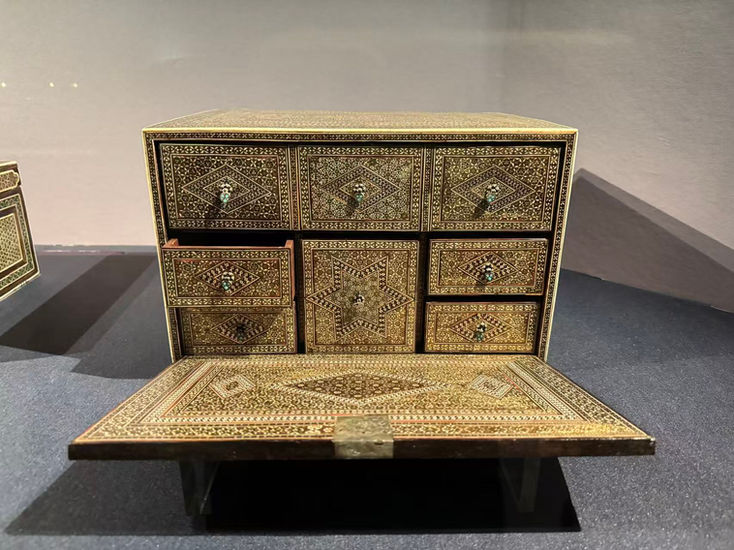
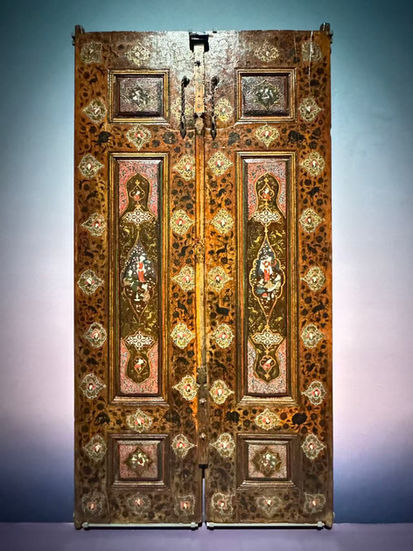
The Qajar Dynasty (1789–1925) was the last dynasty in Iranian history established by a Turkic tribe, ruling Iran for nearly 140 years. The Qajar family originated from the Turkic Qajar tribe and was originally a vassal tribe of the Safavid dynasty. The Qajar Dynasty continued the Safavid-established status of Shia Islam as the state religion, and Persian literary classics were preserved. The Qajar period was an important transitional era in Iranian art history, where traditional Persian art and European artistic styles converged, creating the distinctive "Qajar style."
The Mughal Empire was the most glorious empire in the history of the Indian subcontinent, lasting from 1526 to 1857—approximately 331 years. At its greatest extent under Aurangzeb (around 1700), the Mughal Empire encompassed most of present-day India, all of Pakistan, all of Bangladesh, and eastern and southern Afghanistan. The Mughal Empire created a unique Indo-Islamic culture.
Understanding the history of these four empires makes the exhibition title seem quite precise.


The "Gunpowder Empires" and Their Commonalities
The Ottoman, Safavid, and Mughal Empires coexisted during the 16th–18th centuries and are collectively known as the "Gunpowder Empires." Together, they constituted the golden age of Islamic civilization. These three empires shared many common characteristics: all relied on cannons and firearms to establish military dominance; their rulers all had Turkic or Mongol ancestry; all were multiethnic empires established through military conquest; and all adopted Islam as their official religion (though of different sects).
Persian culture was their shared "high culture." An intriguing fact: the Mughal emperors' mother tongue was Persian, not an Indian native language. Babur wrote his diary in Turkic (Chagatai), but his descendants all spoke Persian as their first language. The elite classes of all three empires read the same corpus of Persian literary classics. This shared Persian culture allowed intellectuals to move freely among the three empires.
Artistic Connections Among the Three Empires
The Pudong Art Museum exhibition highlights the following artistic connections among the three empires:
1. Architecture: The Common Islamic-Persian Tradition
The architecture of all three empires derived from the Timurid architectural tradition, yet each developed its own distinctive style:
Domes: Ottoman architecture featured massive single domes (influenced by Byzantine tradition); Safavid architecture had onion-shaped double domes; Mughal architecture also used onion-shaped domes (a fusion of Persian and Indian styles).
Minarets: Ottoman minarets were slender and pencil-shaped; Safavid minarets came in pairs (sitas); Mughal minarets were independent corner towers.
Decoration: The Ottomans liked Iznik tiles, the Safavids liked colorful mosaic tiles, and the Mughals liked white marble with gemstone inlay.
Representative Works: The Süleymaniye Mosque (Ottoman), the Imam Mosque (Safavid), and the Taj Mahal (Mughal).
2. Miniature Painting: The Fusion of Three Traditions
Miniature painting was an art form shared by all three empires:
Persian miniature painting was the source that influenced the other two traditions:
Safavid miniature painting—Orthodox Persian style, with gorgeous colors and emphasis on decorativeness.
Ottoman miniature painting—incorporated Byzantine and European influences, with greater emphasis on historical documentation.
Mughal miniature painting—integrated Indian local traditions, with greater emphasis on realism and portraiture.
Mughal Emperor Humayun brought Safavid painters Mir Sayyid Ali and Abd al-Samad to India, which led to the establishment of the Mughal school of painting. The Ottoman court also absorbed Persian painters.
3. Calligraphy
Persian-Arabic calligraphy was an art shared by all three empires:
Nastaliq script—The representative style of Persian calligraphy, revered in all three empires.
Calligraphers enjoyed extremely high status in all three courts.
Exquisite calligraphy presented Quran manuscripts, poetry collections, and historical works.
4. Carpets and Textiles
All three empires had well-developed carpet weaving traditions:
Persian carpets—centered in Isfahan and Tabriz.
Ottoman carpets—centered in Uşak and Bursa.
Mughal carpets—developed under Persian influence.
These carpets circulated among the empires; Persian carpets were prized collectibles in both Ottoman and Mughal courts.
5. Metalwork and Ceramics
Metalwork:
Ottoman Empire: Renowned for weapon forging and metal inlay techniques. Craftsmen excelled in creating swords from Damascus steel and applying gold and silver wire inlay ("koftgari" technique) on metal surfaces. This work, which had detailed arabesque geometric and floral patterns, was often used to decorate weapons, helmets, and other items.
Safavid Empire: Metalwork inherited Persian traditions, characterized by fine engraving and enamel painting. Craftsmen favored carving poetry, hunting scenes, and floral patterns on copper and gold/silver vessels. The works combined practicality with literary elegance.
Mughal Empire: The most representative was "Bidri" ware—using zinc alloy as the base, inlaid with silver or gold wire to create striking black-and-silver patterns. Mughal craftsmen also excelled at combining gemstones with metal to create ornate weapon hilts and court objects, showcasing imperial luxury.
Ceramics:
Ottoman Empire: Most famous for "Iznik" pottery. Early pieces were influenced by Chinese blue-and-white porcelain, primarily using cobalt blue. By the mid-to-late 16th century, a distinctive "tomato red" glaze was developed. Patterns often featured tulips, pomegranates, and hyacinths, widely used on mosque tiles and court vessels, with vivid and striking colors.
Safavid Empire: Ceramics were similarly influenced by Chinese porcelain. Craftsmen blended Persian aesthetics with blue-and-white imitation, developing distinctive local-style blue-and-white ware. Additionally, the traditional Persian "lusterware" technique continued, creating an iridescent, metallic sheen on vessel surfaces, often used for decorating mosque and palace walls.
Mughal Empire: Achievements in ceramics were relatively limited, mainly influenced by Persia and Central Asia. "Blue pottery" was most distinctive in the Jaipur region, using quartz powder rather than traditional clay, with glazes displaying unique cobalt blue tones. It was mostly used for architectural decoration and everyday vessels, with a rustic yet regionally distinctive style.






Conclusion: The Transition to Modernity
The Ottoman, Safavid, and Mughal Empires together formed the three pillars of early modern Islamic civilization. The Islamic world's transition from the medieval to the modern era was also marked by the rise and fall of its powers. The Qajar dynasty, which succeeded the Safavid Empire, found itself at the forefront of a collision of civilizations. Persian-Islamic aesthetics and European art merged; although "purity" was somewhat diluted, it created a unique hybrid aesthetic that paved the way for the modernization of Iranian art.


Comments