
Aurora Museum, Shanghai
- Cathy Shen

- Mar 22
- 2 min read
I had originally planned to visit the Aurora Art Museum today, only to find upon arrival that there were no exhibitions on. Across the street, however, the Aurora Museum was running several permanent exhibitions covering ancient Chinese ceramic sculpture, jade, porcelain, and Buddhist statuary. As it happened, I had visited a few galleries at the Shanghai Museum East Bund just the previous week—covering much the same ground—so it seemed intriguing to see how this institution, whose entire collection is drawn from private holdings, would compare.





The second floor is devoted to ceramic sculpture, with pieces drawn primarily from the Han and Tang dynasties. The craftsmanship is remarkable: the everyday lives of people during the height of the Han and the flourishing of the Tang—their dress, food, dwellings, and commerce with foreign peoples—are rendered with vivid, almost theatrical immediacy. Though the original pigments have largely flaked away over the centuries, the forms alone—figures, implements, chariots, horses—are more than enough to leave a deep impression.





The jade exhibition on the third floor truly surprised me. This exhibition represents every era of jade's rise and flourishing in China, from the Stone Age to the Qing dynasty. The fourth floor even hosts a dedicated special exhibition featuring masterworks from the late Neolithic period—the first great age of jade in Chinese history—and the breadth of the collection was, frankly, staggering. I later discovered that the Aurora Museum operates its research center for ancient artifacts. That a private collection would go beyond mere display to establish a dedicated scholarly team is genuinely admirable.





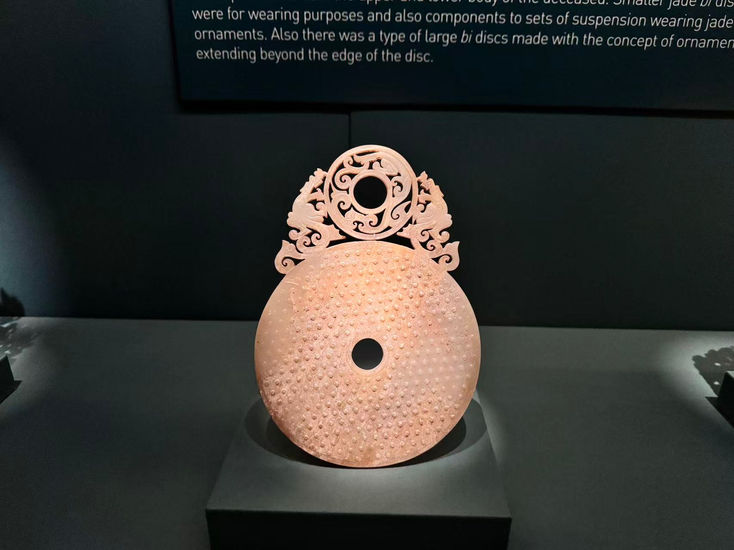



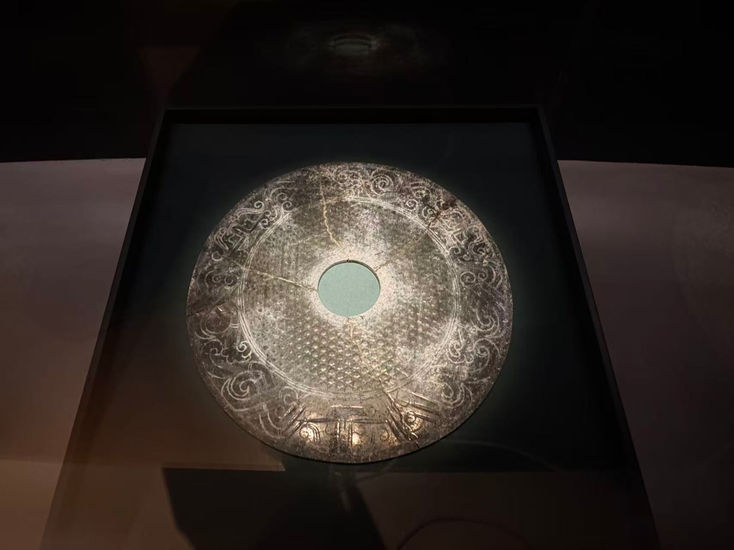







In the jade research gallery, I came across something that gave me pause. One particular cabinet presented a selection of man-made and natural stone objects from the same period as jade's development—pieces crafted to imitate the appearance of jade. The presence of agate, a natural mineral, was entirely unsurprising. But the next label stopped me short: glass. Several white, blue, and yellow objects from the Warring States period and the two Han dynasties were identified simply as "glass." My immediate reaction was, "Shouldn't these be called liuli in an ancient context?" Is "glass" really the right term for a museum label here? It's a question I intend to explore properly in a separate piece.


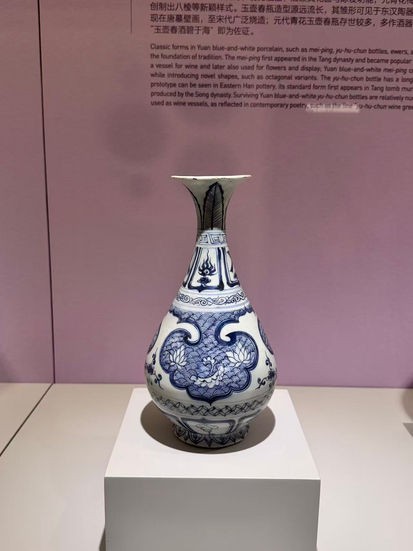
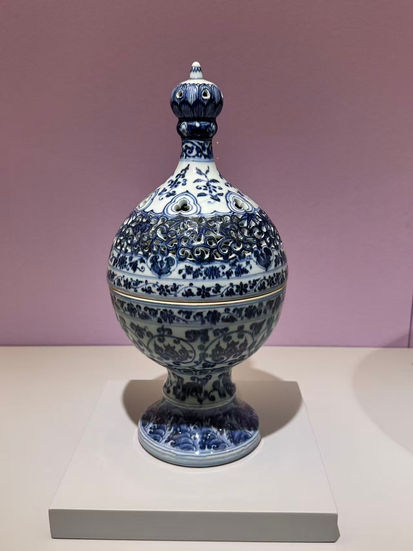
Porcelain, particularly blue-and-white ware from the Yuan through Qing dynasties, dominates the fourth floor. The gallery's breathtaking beauty captivated me as soon as I entered. Many of the pieces on display have been restored, and the faint traces of old fractures are still visible, lending each object a quiet sense of historical weight and fragility. The labels consistently note that Yuan blue-and-white tends toward a coarser body, thicker glaze, and a somewhat greyed blue tone, while later Ming and Qing pieces grow progressively whiter, finer, more vitrified in the glaze, and bluer in the cobalt. I tried my best to observe these distinctions, but aside from the Yuan pieces clearly running larger in scale, I'll admit that the subtler characteristics are not something one absorbs in an afternoon.






The Aurora Museum's standard admission is RMB 60 per person. The exhibition spans five floors; in addition to those described above, the uppermost level presents an array of ancient Chinese Buddhist figures and inscribed steles. Allow at least two hours for a complete visit.


Comments