
West Bund Museum
- Cathy Shen

- Nov 24, 2025
- 11 min read
The West Bund Museum is located at 2600 Longteng Avenue, Xuhui District, Shanghai, situated along the Xuhui Riverside. Designed by the architectural firm led by renowned British architect David Chipperfield, it features a structure composed of six volumes, including exhibition halls, sunken courtyards, and multifunctional spaces. The façade uses recycled jade glass, enhancing natural light effects during the day through clerestory windows and skylights, while creating an atmosphere with warm lighting at night. The venue took three years to complete, with a total floor area of 25,000 square meters.


i. Temporary Exhibition, Centre Pompidou + West Bund Museum Project
From its initial opening, the West Bund Museum has launched a five-year exhibition collaboration project with the Centre Pompidou in France. From April 29, 2025, to October 18, 2026, Exhibition Halls 1 and 2 on the museum's second floor present the fourth phase of the West Bund Museum and Centre Pompidou five-year exhibition collaboration project, "Reshaping Landscapes." His exhibition showcases landscape-themed artwork carefully selected from the Centre Pompidou, encompassing paintings, installations, videos, and new media works that reveal the unique characteristics of modern and contemporary landscape subjects. The entire exhibition is divided into seven themes: Structure Space, Surreal Visions, The Dazzled Gaze, Abstract Landscapes, Views from Above, Urban Landscapes, and Panoramas. It features works in various styles, including Cubism, Surrealism, Fauvism, Abstractionism, Futurism, and Pop Art. While the number of works is modest, they are highly representative.
Art Movements and Forms of Expression
The following are the artistic movements or forms of expression involved in this exhibition's works.
Cubism
The Cubist painting method developed through a series of stages. The Parisian art scene was exceptionally active in the early 20th century. Following Post-Impressionism and Symbolism, young artists were universally concerned with how to innovate forms to express people's inner emotions and psychology in a rapidly transforming industrial society. New movements emerged successively in France, Germany, Italy, and Russia.
In early 20th-century Paris, two painters, Braque and Picasso, were deeply influenced by the simple forms and sharp contrasts in African sculpture and, on this foundation, developed a new style. Due to the emergence of their distinctive painting style as representatives, a movement and school subsequently appeared in the history of Western modern art, known as Cubism.
This movement relatively abandoned excessive focus on pictorial harmony, primarily using conflicting and distorted imagery to form a visual language. In stark contrast to Post-Impressionist and Fauvist works that didn't emphasize allegory and content, works from this movement typically contained deeper metaphors or figurative expressions. Combined with their unique compositional forms, they were thus called "Cubism."
Cubism is an art movement rich in concepts, primarily pursuing the beauty of geometric forms and the aesthetic appeal produced by their arrangement and combination. It rejected traditional methods of observing and representing objects from a single viewpoint, instead bringing together observations and understandings from different viewpoints onto the canvas, thereby expressing the continuity of time. This approach doesn't rely on visual experience and sensory perception but primarily depends on reason, concepts, and thinking. While Cubism had strong formalist tendencies under the banner of anti-tradition, its explorations in artistic form provided impetus to practical art fields that emphasize formal beauty, such as modern industrial arts, decorative arts, and architectural arts.



Surrealism
Surrealism was a social and cultural movement that emerged in France after World War I, with its influence spreading across European countries. It encompassed various fields, including literature, fine arts, theater, and music. It absorbed concepts of anti-tradition and automatic creation from Dadaism but overcame Dadaism's weakness of negating everything, possessing relatively definite beliefs and programs. As an art movement, it spread most widely between the two World Wars. Its representative artists include René Magritte, Yves Tanguy, Joan Miró, Salvador Dalí, and Paul Delvaux.
Surrealism was deeply influenced by Sigmund Freud's theory of the subconscious, dedicating itself to exploring the transcendental aspects of human experience and attempting to break through realistic concepts that conform to logic and actuality. It fused realistic concepts with instinct, the subconscious, and dream experiences, resulting in absurd and surreal situations. This aesthetic concept, unbound by rationality and moral concepts, prompted artists to use different techniques to express primitive impulses and the release of free imagery.
Surrealist literature emphasized "automatic writing," while visual arts emphasized accidental combinations, unconscious discoveries, and faithful reproduction of dreams, often employing "frottage" techniques. In terms of artistic methods, the movement freely utilized realism, symbolism, and abstraction.








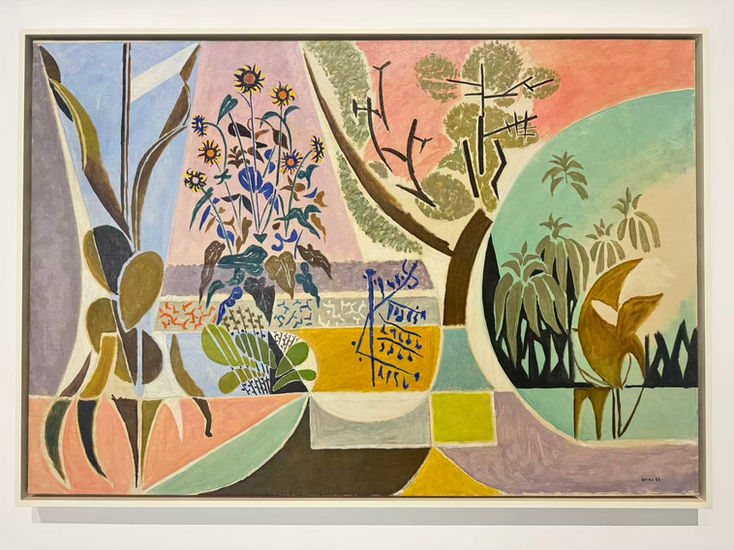


Fauvism
Fauvism was a modernist painting movement that originated in France in the early 20th century, appearing as a loose artistic association in 1905. Its name derived from critic Louis Vauxcelles' satirical evaluation of works exhibited at the Paris Autumn Salon that same year, describing their wild style as that of "wild beasts" (fauves). Core members included Henri Matisse, André Derain, and Maurice de Vlaminck, among others. They advocated expressing subjective emotions through unmixed pure pigments, bold brushstrokes, and flattened compositions, breaking through traditional perspective and chiaroscuro principles while absorbing elements from African sculpture and Eastern art.
Fauvism continued Post-Impressionism's exploration of color, emphasizing it's emotional expression and visual impact. They frequently juxtaposed high-saturation primary colors such as red, blue, and green to create decorative pictorial effects. The group had no unified manifesto, with members being most active between 1905 and 1908, later moving in different artistic directions. As the West's first avant-garde art movement, its concept of color liberation laid the foundation for modern art development, gradually merging into other movements after 1908.





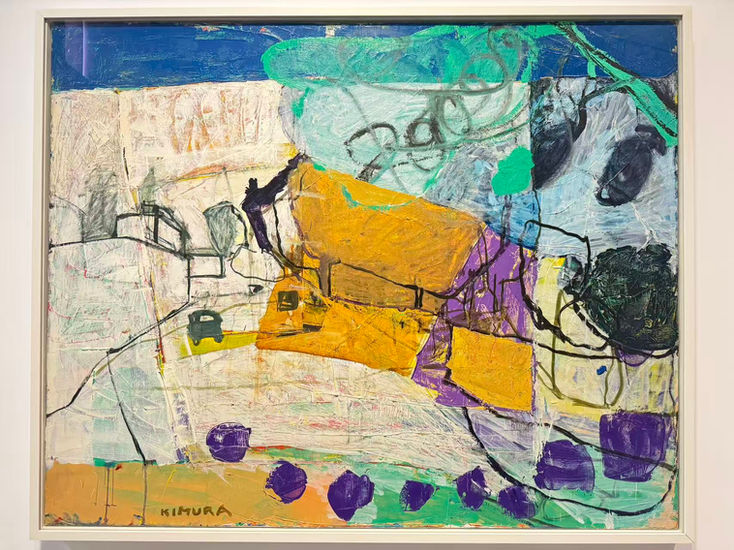


Abstractionism
Abstractionism, also known as Abstract Art and Non-Objective Painting, was one of the most important movements in Western art during the period between the two World Wars. Using psychological associations triggered by visual stimulation as a channel, the movement employed pure painting elements as the main constituents of pictorial composition, fully exploiting the abstract characteristics of points, lines, surfaces, and colors. It extracted the "purity" of painting from objective objects and pushed it to its extreme, presenting abstract and non-figurative artistic styles. This art form emphasized form more heavily, showcasing the most radical concepts and far-reaching influences found in Russian Constructivism and the Dutch De Stijl movement. The emergence of abstractionism was driven not only by the desire to escape reality but also by industrial and technological developments, which served as a complement to realism.
Abstractionism had already emerged around World War I, showcasing vastly different styles across various schools. There were two main types: one was lyrical abstraction represented by Kandinsky, also called Constructivism; the other was geometric abstraction represented by Mondrian, leader of the Dutch De Stijl movement.
Abstract art represented a complete rebellion against the Western artistic tradition. It advocated the complete liberation of formal language by expressing what lies deep within our hearts through languages such as "circles and squares" and by freeing itself from depicting the visible characteristics and true appearance of physical forms. In a certain sense, abstractionism represents one of the fundamental characteristics of 20th-century painting. It was not a specific painting group or school; rather, it was a general term for artistic styles that distanced themselves from real life by representing inner meaning through abstract colors, points, lines, and surfaces instead of depicting natural objects.








Pop Art
Pop Art originated in the 1950s in London, England, and the United States as an artistic movement focused on mass culture, consumerism, and commercial elements. Through techniques such as collage and screen printing, the movement transformed everyday objects and popular symbols into artistic creations. The movement's name derives from the abbreviation of "popular" and advocates for breaking down the boundaries between high art and popular culture, reflecting the material landscape of the post-industrial era through elements such as canned goods, celebrity portraits, and advertising images.
Pop art creation frequently employed techniques such as appropriation of mass symbols, reproduction, and mass production, incorporating elements like commodities, trademarks, and comics into works, eliminating the concept of "original work," and challenging traditional handcraft artistic creation methods. The representative artist Andy Warhol's screen-printed series "Marilyn Monroe" and "Campbell's Soup Cans" created a distinctive visual language through repetitive mechanical reproduction. Roy Lichtenstein used Ben Day dots to enlarge comic images, while Keith Haring conveyed social concepts through symbols in street graffiti.
Futurism
On February 20, 1909, Italian poet Filippo Tommaso Marinetti published the "Futurist Manifesto" in the French newspaper Le Figaro, announcing the birth of Futurism. The movement's primary ideological foundation was formed by Nietzsche's superman concept and will to power, along with Henri Bergson's intuitionism. Futurism began as a literary movement and quickly expanded to include various art forms such as painting, music, theater, film, sculpture, and architecture. As a widespread intellectual movement, Futurism originated in Italy and later spread to Russia, influencing France, the United States, England, Germany, Poland, and other countries. Italian painter Carlo Carrà and others founded the Futurist school, with other main representatives including Umberto Boccioni, Luigi Russolo, Giacomo Balla, and Gino Severini.
Futurist theory reflected the strong desire for innovation among young Italian artists during the early 20th century. While the Second Industrial Revolution advanced rapidly, Italy's industrialization process fell behind that of other European countries, resulting in dissatisfaction with the stagnant and outdated state of Italian art since the 19th century. The movement therefore advocated for completely abandoning tradition and embracing the future, particularly by promoting machine aesthetics, which made the paintings distinctive in both elements and techniques.
Although Futurism was internally diverse and heterogeneous, most of its adherents maintained a rebellious stance toward historical tradition, placing greater emphasis on aesthetics that were adapted to the new era. They mockingly called the act of inheriting tradition "passatismo" (pastism), and the futurists sought to "liberate Italy from the witchcraft of museums that were like worthless cemeteries." They opposed all forms of imitation, resisted harmony and refined taste, and denied the importance of art criticism.
The painting school he founded extracted the spirit of the times from new historical perspectives and developed a unique style. They believed that artists should abandon historical references and create work that reflects modern life, thereby discovering "the ideal of beauty" (aesthetics) in this new era. Among the characteristics of this new era, machines and technology, along with their associated speed, power, and competition, were particularly prominent; Futurism strongly advocated for machine aesthetics. Their fanatical love for elements such as speed, technology, and violence made automobiles, airplanes, industrialized cities, and round-the-clock trains fascinating to the Futurists.
These concepts influenced the painting practices of Futurists in various ways. On one hand, the artists emphasized speed and dynamics, highlighting the "sense of movement" in their painted images. Futurist painters conducted a detailed analysis of the fundamental elements of expressiveness, referred to as "dynamic lines," and employed Cubist techniques to deconstruct objects, depicting scenes of movement and sensations of motion that occasionally appeared bizarre. On the other hand, the Futurists emphasized a comprehensive perception of movement by positioning viewers at the center of the composition and frequently employing Impressionist techniques such as pointillism to convey complex perceptions. In summary, the technical vocabulary of the artists was largely influenced by Neo-Impressionism and Cubism; they enthusiastically used lines and colors to depict overlapping forms, continuous interlacing layers, and combinations. Additionally, they employed both wavy and straight lines to represent light and sound while expressing objects in rapid motion.


Figurative Painting
Figurative painting is an art movement initiated after World War II by a group called the "Witnesses," which included artists like Bernard Buffet. The movement insisted on continuing the European painting tradition while breaking through traditional realistic frameworks in the post-war European art environment, which was influenced by American Abstract Expressionism and Minimalism, integrating artists' concepts and subjective emotional expression into the objective representation of forms.
Their creative methods retained figurative forms and emphasized the shaping of artistic imagery through drawing techniques, color contrasts, and unconventional composition. Works often focused on social reality themes, conveying more profound meanings through symbolic representation, and attempting to establish a balance between the figurative and the abstract.
This movement originated from mid-20th century realist thought and was influenced by both the post-war social environment and the evolution of artistic movements. During the Renaissance, Western figurative painting achieved its highest technical level through the use of scientific perspective and anatomical studies. The birth of photography in the 19th century led to a shift in art toward non-representational exploration.





ii. Fluxus Exhibition
On the other side of the second floor, Exhibition Hall 3 is hosting an art exhibition titled "Chance! Fluxus!" As the name suggests, this exhibition primarily features works from the Fluxus movement, includes some works from Dadaism as a precursor to Fluxus, and showcases pieces by successors who continued Fluxus concepts.
Fluxus Movement
The Latin origin of the word "Fluxus" means "flow" and "change." In English, the term signifies impact, transformation, and intense passion. Fluxus possessed a strong Dadaist attitude, advocating freedom and change, opposing institutional oppression, a strong political consciousness and a desire to intervene in society. Luxus artists referred to their creations as "events" or "actions." They challenged all definitions of art by assembling various found materials, including waste materials, through collages for their creations. They also moved their performances out of galleries and onto the streets. American artist John Cage initiated the Fluxus art movement, which united avant-garde artists from Europe, America, and Japan while promoting the internationalization of avant-garde art.
Fluxus was a loosely organized international avant-garde art collective. Artists emphasized the importance of chance and uncertainty in their creative processes, believing that the act of creation held more significance than the final result. Fluxus artists often engaged in anti-art experimental performance pieces, attempting to demonstrate to the public through their rejection of institutional conventions that art could have many more possibilities. Fluxus works integrated multiple forms of art, including visual arts, poetry, music, and design.
Dadaism
Dada was an art movement that emerged during World War I. It first appeared in Zurich, Switzerland, and subsequently emerged in many cities, including New York, Paris, Berlin, and Cologne. Dadaism manifests more as a consensus of ideological attitudes than a unified style, expressing itself in poetry, music, and painting. In the eyes of Dadaists, war was a form of insane collective slaughter. They believed that this enormous disaster was linked to the rationalist thinking and logic that revered power, and that society could only be saved through anti-rational, anarchist strategies designed to awaken people's inner intuition. Therefore, Dada expressed its feelings about the absurd by adopting a nihilistic attitude.
Dadaist artists believed that war challenged every aspect of society, including the field of art. Their goal was to destroy traditional values in art and create a new art that could replace existing art. In addition to opposing war, Dadaists also rejected the bourgeoisie and displayed radical leftist tendencies. The founder of Dadaism was the writer Hugo Ball. In 1916, Hugo Ball established the Cabaret Voltaire in Zurich, which became the headquarters for Dadaists. Dadaism eventually became a global movement and laid the groundwork for Surrealism, which arose in Paris after World War II. Representative Dadaist artists include Hans Arp, Marcel Duchamp, Francis Picabia, and Kurt Schwitters. Marcel Duchamp was the most renowned Dadaist artist, hailed as the "father of modern art." His questioning of Western artistic tradition had a profound impact.
Although Dadaism spread across a wide range of styles and ideas, it ultimately proved to be a very unstable literary and artistic trend. By 1924, the nascent Surrealism essentially absorbed Dadaism, and Dadaist artists gradually joined other movements. Overall, Dadaism was not a mature artistic movement but rather a state of artistic thinking in transition. Its artistic concepts were destructive and, because they were built on destroying the old order, inevitably short-lived. However, precisely because of Dadaism's radical view of breaking with the old and establishing the new, numerous modern and postmodern movements of the 20th century were catalyzed and developed substantially. Without the efforts of the Dadaists, it would have been difficult to achieve these artistic innovations.





iii. David Hockney's "Bigger & Closer" Exhibition
Finally, the first floor of the art museum features David Hockney's "Bigger & Closer" exhibition, which runs from April 29, 2025, to November 30, 2025. The entire exhibition is a video approximately one hour long, representing the artist's first comprehensive retrospective work presented in digital media to date. The exhibition was meticulously created by David Hockney himself and his team over three years and is touring worldwide. The exhibition is divided into six chapters that present classic artistic creations, including paintings, collages, photography, and stage designs. The exhibition features symphonic music commissioned from composer Nico Muhly and includes narration by Hockney himself, allowing visitors to experience how the artist continues to innovate and convey beauty and impact through his works up close.
The combined ticket for the three exhibitions mentioned above costs 220 RMB, and students receive a 50% discount. The entire exhibition requires approximately 3 hours for a complete viewing. The exhibition layout, work labels, exhibition posters, and audio guides at the West Bund Museum are all of very high quality.


Comments