
The Power Station of Art (PSA)
- Cathy Shen

- Nov 16, 2025
- 3 min read
The Power Station of Art (PSA) is a non-profit art institution established to promote the development of contemporary art, which opened on October 1, 2012.
Located on the banks of the Huangpu River, Shanghai's mother river, it covers 42,000 square meters with 15,000 square meters of exhibition space. The interior features a maximum cantilever of 45 meters, and its 165-meter-tall chimney serves as both an urban landmark of Shanghai and a unique exhibition space. The PSA building was converted from the former Nanshi Power Plant. It not only witnesses Shanghai's urban transformation from the industrial to the information age but also bids farewell to the past of unrestrained energy consumption. Its rough and unrestrained industrial architectural style provides rich possibilities for artists' creative imagination.

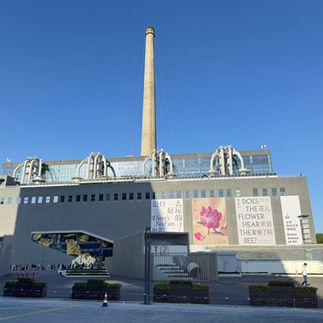


The Power Station of Art is also the venue for the Shanghai Biennale. Founded in 1996, the Shanghai Biennale is China's longest-running international contemporary art biennale. Through 30 years of development and refinement, this exhibition has evolved into China's most internationally influential art exhibition, garnering widespread recognition from the global art community and being acknowledged as one of Asia's most significant international biennales. It not only showcases the latest achievements in contemporary art to the world on an academic level but also constructs a platform for communication and exchange between contemporary art and the general public. The 15th Shanghai Biennale, which opened on November 13, 2025, is currently being held here. The theme of this edition is "Does the Flower Hear the Bee?" and it is curated by Katie Scott and others, featuring over 250 works by 67 artists that explore the interaction between human and non-human intelligence.
Recent scientific discoveries that indicate interactive relationships between different life forms inspire the theme of the 15th Shanghai Biennale. Like flowers that can 'hear' the buzzing of bees, this exhibition examines non-human intelligence in relation to human intelligence, exploring the intersection of various modes of intelligence. We believe that contemporary art provides a unique space for such exploration, allowing us to engage in immersive and interconnected experiences. In such an environment, human communities can establish deeper connections with what ecological thinker David Abram calls 'the more-than-human world.'" - Excerpt from the exhibition foreword.
The works featured in this exhibition are primarily contemporary avant-garde art, which includes paintings, installation art made from various materials, photo and video art, and pieces created with AI assistance. They bring visual and auditory impact to the visitors. These contemporary artworks reflect the artists' deeper understanding of the world, their comprehension of nature, their insights into life forms, and their boundless imagination.
It is worth mentioning the rich variety of Biennale merchandise. In addition to traditional cultural creative products, each ticket holder receives a sample of Manuka honey presented in a card format. The exhibition also organized roundtable discussions and workshops with artists and curators; however, these events were only scheduled for the first few days of the opening.






On the fourth floor of the art museum, Lin Tianmiao's solo exhibition "There's No Fun in It!" is currently on display. Since the 1990s, Lin Tianmiao has emerged as one of China's pioneering artists in demonstrating contemporary gender consciousness through her unique personal artistic style. Grounded in her experiences, she delicately captures various experiences in women's lives, whether the joy of nurturing life or the helplessness of facing illness and aging. Her art serves not only as a means of expressing individual experiences but also crystallizes reflections on and responses to the complex emotions present in contemporary society. In the works of this exhibition, she continues to extensively use her earliest core language of "cotton thread and wrapping." Her transformation of everyday items, such as clothing that embodies skin texture, displays enlarged skin patterns in the fabric and incorporates substantial amounts of hair, which gives viewers an extreme visual experience.





The 15th Shanghai Biennale charges an admission fee of 60 RMB, whereas Lin Tianmiao's solo exhibition is free. Viewing the entire exhibition takes about three hours.


Comments