
Sinan Timezone Gallery
- Cathy Shen

- Jan 25
- 2 min read
Sinan Timezone Gallery is a multifunctional art space that integrates a gallery, museum-style art and creative merchandise store, aesthetic communication, and cultural exchange. Located in the Sinan Mansions area of Shanghai, the gallery sits within a historically protected cluster of garden villas in Huangpu District—a neighborhood that also serves as a hub for nighttime cultural and tourism activities.

From November 22, 2025, to January 22, 2026, the Sinan Timezone Gallery is hosting Blossoms Shanghai & Say Nothing, a solo painting exhibition featuring approximately 30 illustrations by the renowned writer and painter Jin Yucheng. Originally a writer by profession, Jin unexpectedly discovered his talent for painting in 2012 while creating illustrations for his celebrated novel Blossoms (繁花). He has since devoted himself to painting, gradually developing a distinctive personal style that culminated in the art book Say Nothing (不响). Jin has selected all the works on display from this collection.
Jin's paintings are characterized by a fresh and refreshing aesthetic, featuring clean lines, soft and elegant colors, and content that reflects the unique character of Shanghai. His works are imaginative and exhibit a quintessential illustration style.


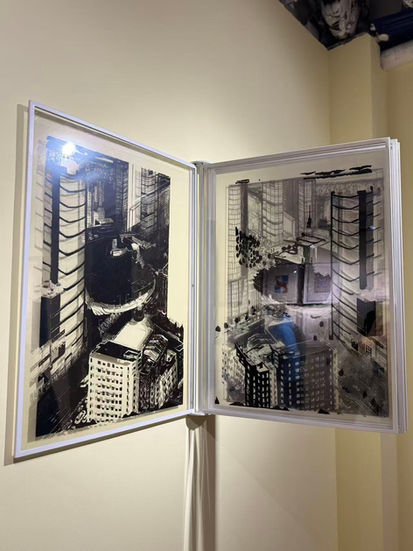








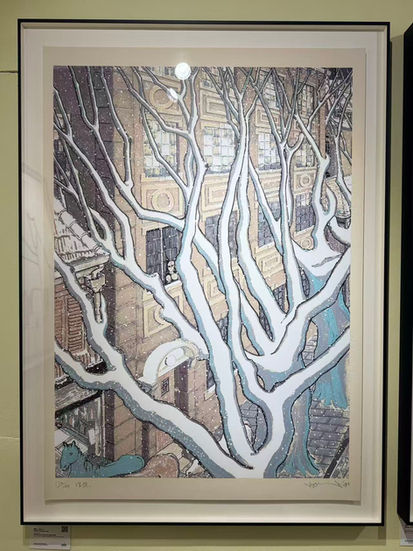






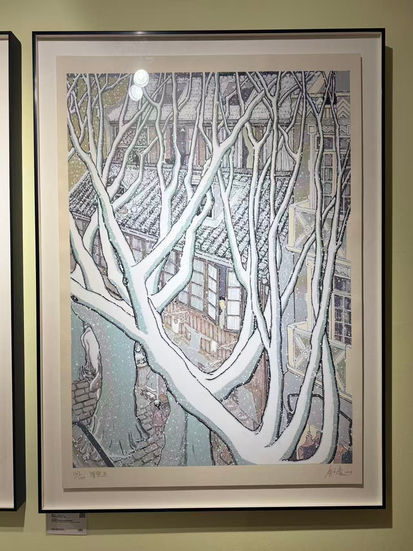


None of the exhibited pieces are original manuscripts; rather, they are screen prints produced on acid-free uncoated paper based on the original artworks, printed and published by Shanghai Yinshuawusuo (Shanghai Print Matter). Screen printing, also known as "stencil printing," involves creating fine perforations in the printing areas while keeping non-printing areas impermeable. The ink used in screen printing is thick and produces vibrant colors, with the size of the mesh openings controlling the output. The process is straightforward to operate.
Screen printing originated in China over two thousand years ago. As early as the Qin and Han dynasties, the jiaxie (clamped resist) printing method emerged. By the Eastern Han dynasty, jiaxie wax-resist dyeing had become widespread, and the quality of printed products had improved. During the Daye era of the Sui dynasty, people began using frames stretched with silk mesh for printing, evolving the jiaxie technique into silk screen printing. According to historical records, the exquisite garments worn in the Tang dynasty imperial court were produced using this method. By the Song dynasty, screen printing had advanced further—the original oil-based pigments were improved by adding starch-based adhesive powders to the dyes, creating a paste for screen printing that resulted in even more brilliant colors. Viewing the prints in person, the colors and textures are indeed visually stunning and enduring—an important reference for our future choices in printing digital artworks.
Exhibitions at Sinan Timezone Gallery are held periodically and are free of charge, though advance or on-site online reservations are required. A visit takes approximately 30–40 minutes.


Comments