
Shanghai Jiushi Art Museum
- Cathy Shen

- Apr 12
- 3 min read
Shanghai Jiushi Art Museum is a non-profit art museum located on the 6th floor of 27 Zhongshan East First Road, Huangpu District, Shanghai. The Bund venue opened on September 30, 2018, within the historic Jardine Matheson Building, a protected heritage structure. It belongs to the Jiushi Art Museum cluster, which also includes Jiushi Art Space at Bund 18 and Jiushi Art Salon at 230 Beijing East Road. On 31 March 2026, the new wing of Shanghai Jiushi Art Museum officially opened on the second and third floors of Bund No. 1. The two locations I visited today were the new wing at Bund No. 1 and the Jiushi Art Space at Bund No. 18. Admission to the former is RMB 28 per person; the latter is free.
Let me start with Bund No. 1. The museum occupies the second floor of the building, where a contemporary art exhibition titled "Take All Things to the Limit" is currently on show, exploring the relationships between humanity, nature, and the environment. Environmental themes have long been among the most popular subjects in contemporary art, and I was genuinely curious about what distinctive character this particular exhibition might bring. The works here are primarily installation and video art. There is, for instance, a botanical installation—withered wheat ears "growing" out of concrete; a video piece showing a group of children marking colors onto snail shells and setting them to "race" within a designated circle; a video work titled Moving Mountain, in which two artists stand before a mountain watching flocks of birds spiral and cry overhead; and a room divided horizontally into two halves with white and blue-green paint, with suspended plastic "islands" likewise painted in the two colors according to their hanging height—at first glance, it genuinely looks like one is peering into a large aquarium installation. The piece that resonated with me the most was an embroidery work: botanical line drawings stitched in black cotton thread onto pale khaki canvas, initially appearing as a fresh and elegant work of art. But once you learn that the plants depicted represent 351 species that have already become extinct on Earth, can you still enjoy it with an untroubled heart? Personally, paintings of natural subjects are among my greatest loves, and I tend not to care for burdening any artwork with meanings that are too overtly "real-world"—nature in itself is worthy of being recorded and appreciated. Yet as a secondary school student facing all kinds of growing pains alongside my classmates, I found myself reflecting that "nature" can refer to everything on Earth untouched by human hand, but it can also point to a kind of inner logic and philosophy: zì rán ér rán—things unfolding naturally, in their own time. That will be the theme of my next curatorial project.






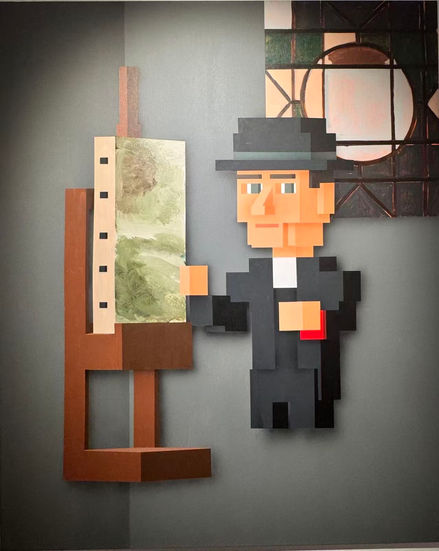
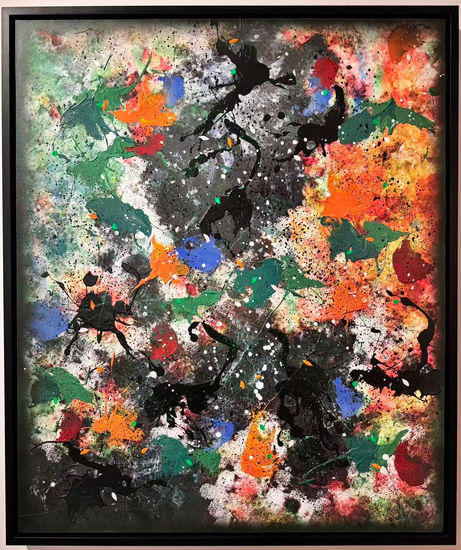
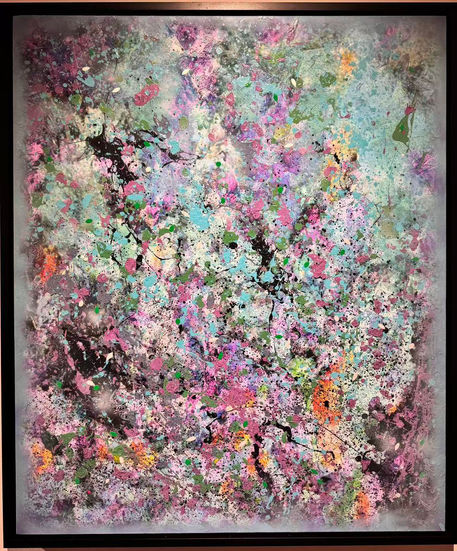
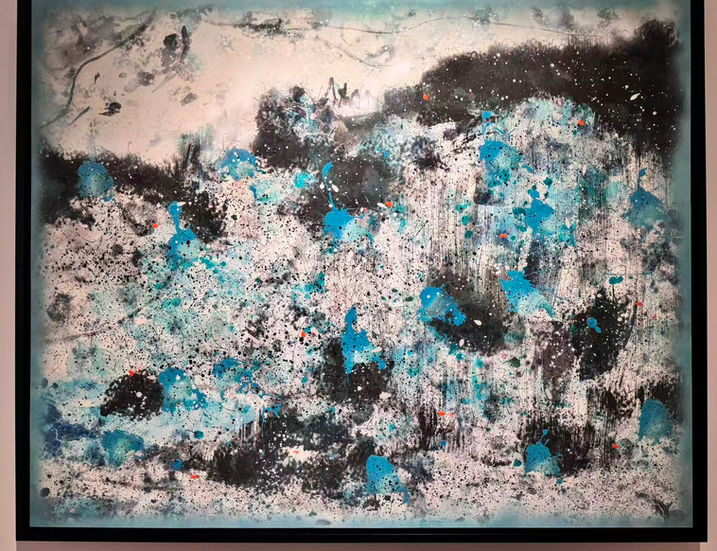
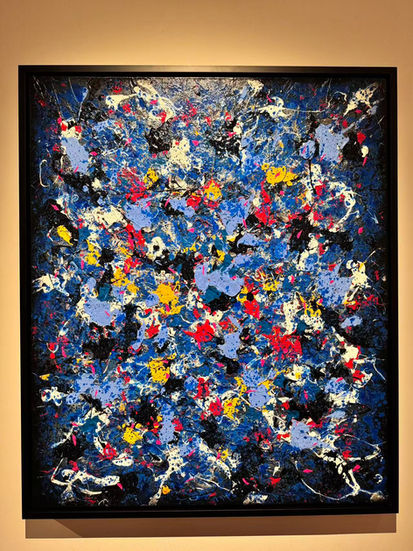
Outside, a spring rain fell in a soft, quiet drizzle—exactly the kind of atmospheric weather I love. I walked along Zhongshan East First Road from Bund No. 1 to Bund No. 18, where the Jiushi Art Space also occupies the second floor. The exhibition space is not as expansive as the new wing, but its central atrium with a surrounding corridor makes it wonderfully well-suited to displaying paintings. The current exhibition is titled "Parakeet Fusion: Paintings by Cultural Ferrymen." The name carries an air of intrigue, and sure enough, there is a story behind it. A species of tropical parakeet once found its way to Paris—originally just a fleeting visitor—but unexpectedly settled there, thrived, and multiplied, eventually becoming an indispensable part of the Parisian landscape. The parakeet serves as a metaphor for certain Asian artists who have lived or worked in France, some as immigrants, others commuting between the two worlds over many years. What is their work like? I found myself truly drawn to this exhibition—because of the color. The high-saturation color combinations so beloved by Parisians, and by the French in general, are interpreted to perfection in a number of the works on show. Without prior context, it would be difficult to imagine that the painters behind these canvases hail from the more reserved and understated world of Asia. Please refer to the photographs I have attached. Beyond the color, the landscape oil paintings—hovering somewhere between realism and dreamscape—offered a different kind of beauty altogether. Overall, this is a must-see exhibition.


































That was my visit for today. This arts institution, nestled among the historic buildings of the Bund, is well worth making the trip to see.


Comments