
Pudong Art Museum (Part One)
- Cathy Shen

- Jan 26
- 3 min read
The Pudong Art Museum (MAP) is an international-level art venue located in the core area of Lujiazui, Shanghai. Pritzker Prize-winning architect Jean Nouvel designed it, setting it apart by hosting world-class art exhibitions. Presently, the museum is showcasing two significant international exhibitions: "The Wonders of Pattern" and "Concordance: Picasso & Paul Smith." The museum has also innovatively introduced the official Doubao AI guided tour service, offering visitors an in-depth interactive experience.
Current Blockbuster Exhibitions (January–May 2026)
"The Wonders of Pattern: Masterpieces from India, Iran, and the Ottoman Empire in the Louvre"—This is the first collaborative exhibition between the Pudong Art Museum and the Musée du Louvre in France, running until May 6, 2026. The exhibition brings together approximately 300 precious artifacts from the Louvre, divided into three sections: India, Iran, and the Ottoman Empire. It comprehensively showcases the artistic achievements and aesthetic patterns of these three great civilizations from the 15th to 19th centuries in metalwork, ceramics, textiles, jewelry, and more.
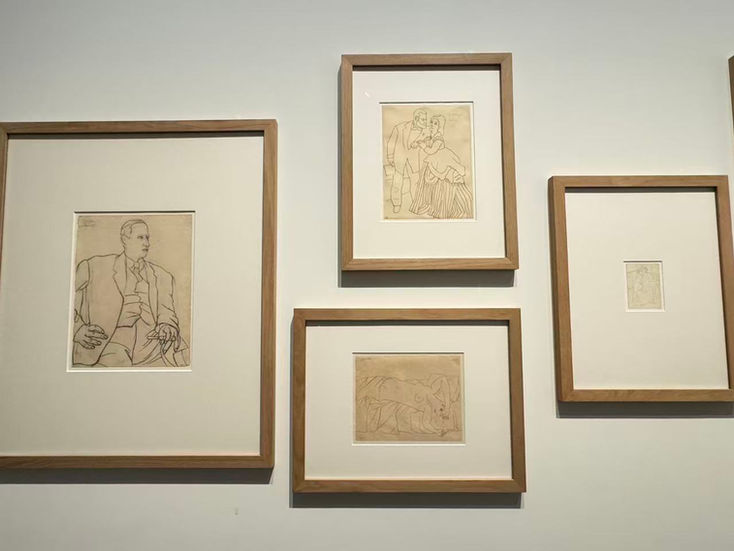
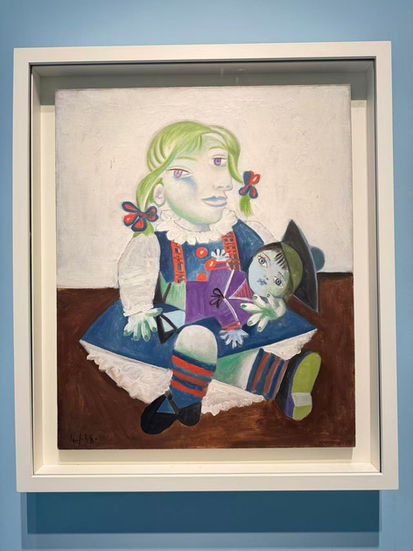
"Concordance: Picasso & Paul Smith"— This exhibition marks the first stop of its global tour, running until May 3, 2026. Through 80 original works by Picasso, the exhibition systematically traces his artistic career and attempts to interpret the creations of this modern art master from a fresh perspective.
Due to the extensive content of these exhibitions, this blog post will first introduce the second one: "Concordance: Picasso & Paul Smith." This is also the exhibition's first showing in China.






























Exhibition Overview
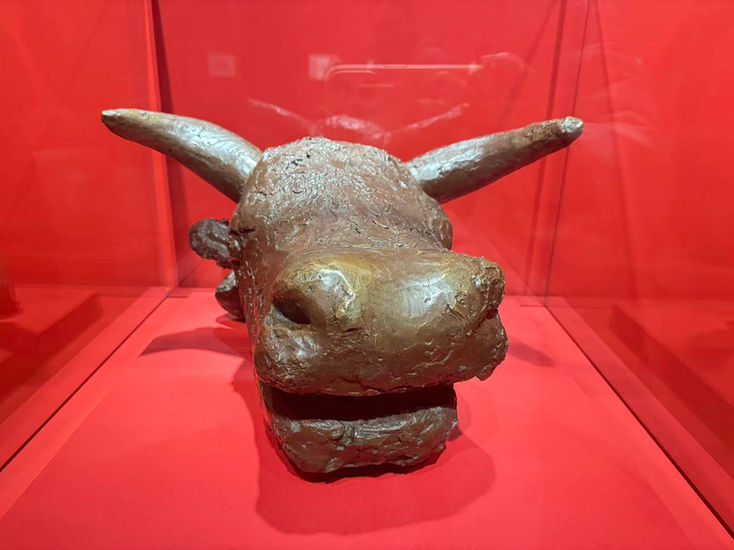
The exhibition is located on the second floor of the Pudong Art Museum. Upon entering, visitors are greeted by the iconic "Bull's Head" sculpture—the signature piece featured on the official poster when this exhibition was shown in Paris in 2023. It was created by welding together a discarded bicycle seat and handlebars. Interestingly, on the side wall where this piece hangs, there is Paul Smith's reinterpretation of the work using the same materials but expressed through modern language and colors, creating a resonance that transcends time and space.
Moving further inside, the exhibition halls are organized according to different periods of Picasso's life and creative phases, divided into 13 sub-galleries:
"Blue Melancholy"
"Women in Pink: Prelude to Les Demoiselles d'Avignon"
"The Cubism Laboratory"
"Childhood"
"Assemblage and Collage"
"The Classical Painter"
"Bullfighting"
"Stripes"
"During the War"
"Unique Ceramic Works"
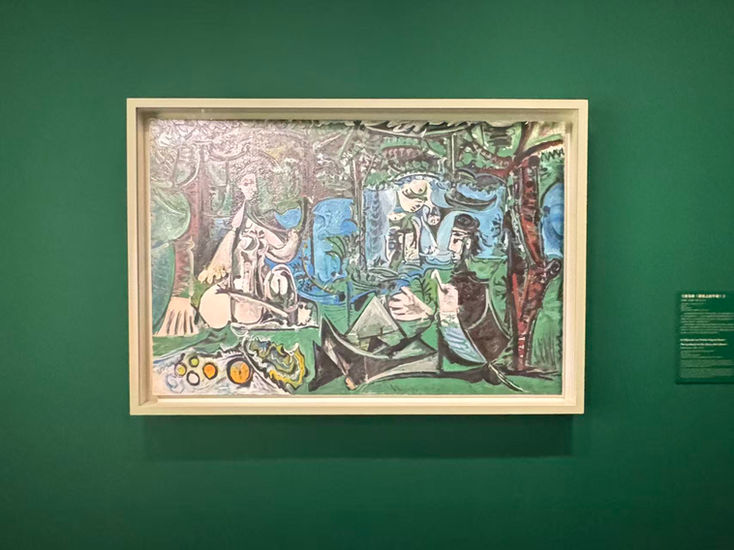
"Luncheon on the Grass"
"Picasso's Breton Stripe Shirt"
"Late Works: 1969–1972"
"Picasso in Exhibitions"
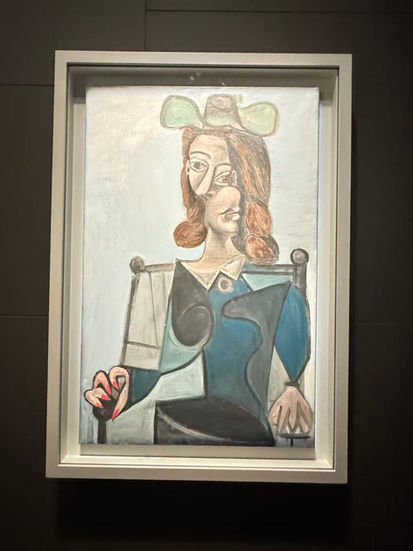
These galleries present to visitors the creative journey and representative works of Picasso. From the early melancholic tones depicting "marginalized figures" to his absorption of primitive styles from Africa and Oceania, his brushwork became more rugged as he gathered momentum for his masterpiece, Les Demoiselles d'Avignon. Later, Picasso shifted toward Cubism; the famous Sacré-Cœur was created during this period, and the corresponding gallery walls are decorated with horizontal and vertical lines to evoke a Cubist effect—a very thoughtful curatorial touch.
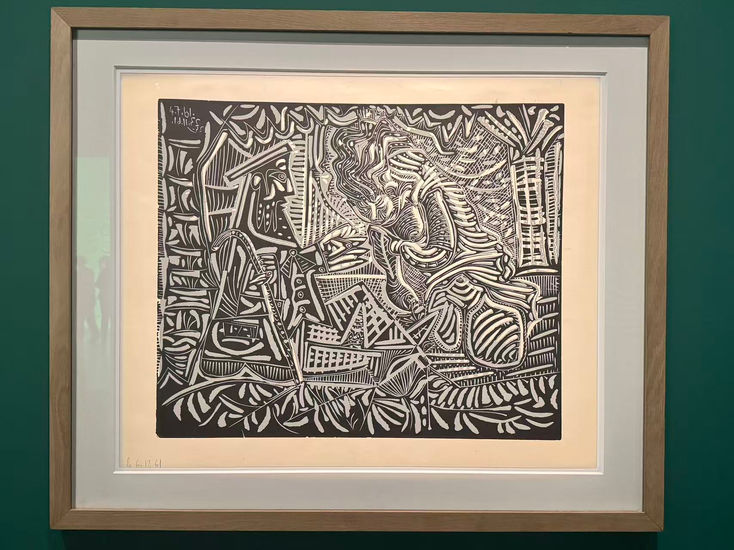
The "Luncheon on the Grass" gallery displays works Picasso created after viewing Manet's Le Déjeuner sur l'herbe, which sparked his intense interest and subsequent reinterpretations. It is said that with remarkable perseverance, he created over 140 works inspired by Manet's painting. He used it as his Cubism laboratory, repeatedly exploring and reinterpreting it through the languages of Cubism, Expressionism, and other modern art movements.
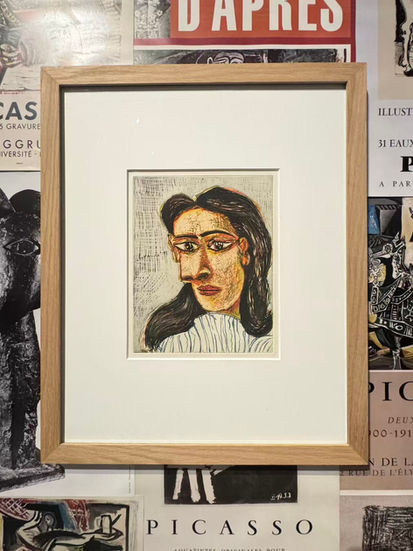
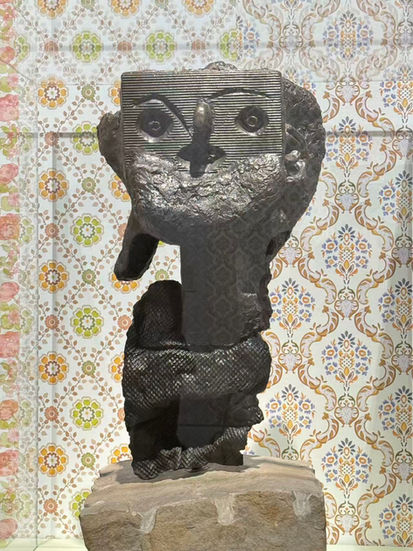
The exhibition also includes Picasso's prints, photographs, and sculptures, offering a rich variety of categories. Picasso exhibition posters from around the world cover the walls of the final gallery, making it particularly striking. Since I recently organized a poster appreciation activity for my club, this collection resonated deeply with me. I must say, Picasso's works are truly perfect as background images for art exhibition posters.
Notable Features
It's worth mentioning that all the exhibits are framed with anti-reflective glass, virtually eliminating glare—a practice highly worth promoting. Additionally, the museum shop merchandise at the Pudong Art Museum—in terms of design, appearance, and craftsmanship—is among the best I've seen at any museum or art gallery.
The "Concordance: Picasso & Paul Smith" exhibition takes approximately one to one and a half hours to view.
I will introduce the other blockbuster exhibition at the Pudong Art Museum in a future blog post.


Comments